Vintage Tractors
John Deere 4020 Buyer’s Guide: HP, Value and What to Inspect
The John Deere 4020 is a durable six cylinder classic that still works for a living. Here are its Nebraska tested hp, what to inspect, parts support and what it sells for.
IN THIS GUIDE JUMP TO A SECTION +
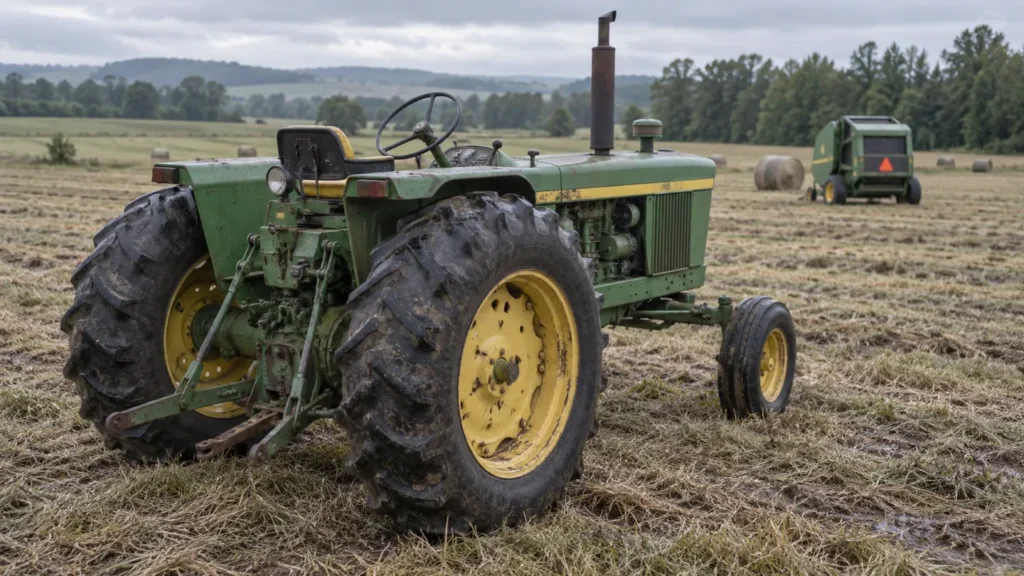
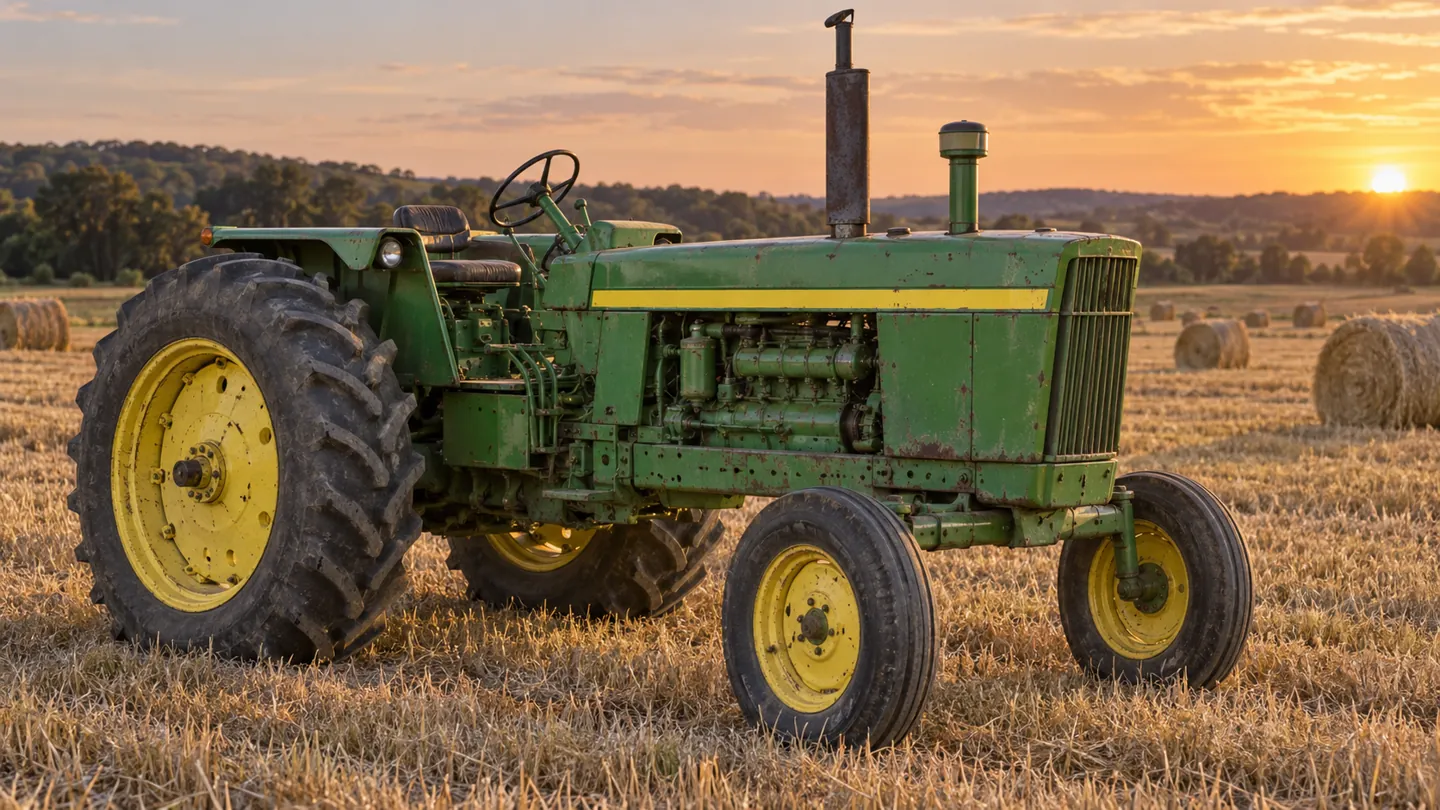
The John Deere 4020 is the six cylinder tractor that made Deere’s New Generation line a best seller. Plenty of them still work for a living in 2026.
Deere’s own heritage newsletter puts production at 1964 to 1972 and sales at about 183,000. Parts catalogs, manuals and know how are everywhere.
It is also big, thirsty and a Category II machine. That makes it a fine fit for heavy tillage and hay on 40 acres or more. It is a poor fit for 5 acres of mowing.
Nebraska tested the first diesel in the fall of 1963 at 91.17 PTO hp. The last diesel tested, in 1969, made 95.83. The 4020 replaced the 4010 with more power, heavier rear axles and a differential lock.
Its Power Shift transmission and, from 1966, the Roll-Gard rollover structure set it apart. Collectors chase the clean ones. Working owners buy the rough ones and put them back to work.
The short version
- Nebraska Tractor Tests measured the diesel at 91.17 to 95.83 PTO hp and 76 to 84 drawbar hp, depending on the year.
- Syncro-Range is simpler to repair. Power Shift shifts under load. Test every gear before you buy either one.
- Our math on 47 auction sales from August 2024 to October 2026: median $6,250, middle half $3,873 to $8,250.
- Diesels before serial 201,000 use a 24 volt system. The 1969 and later console tractors use 12 volts.
- Most 4020s left the factory without a rollover structure. Plan to add one, and check the rebate program first.
What the John Deere 4020 is
The 4020 is a two wheel drive row crop tractor with a 6 cylinder engine and 8 forward speeds. It has an independent PTO and closed center hydraulics. Deere also built a standard tread version and a high crop version, and the later parts catalog adds a power front wheel drive standard.
Engines came in diesel, gasoline and LP gas. The diesel is a 404 cubic inch six with a 4.25 inch bore and a 4.75 inch stroke, rated at 2,200 rpm. Those figures come straight from the Nebraska test reports.
The gasoline and LP engines Nebraska tested in 1963 and 1966 displaced 340 cubic inches. By the 1969 tests the gasoline engine was a 362. The LP engine was still a 340 in its last test, in 1966.
Diesels dominate. TractorData’s production count is 184,879, with 168,311 diesel, 8,445 LP gas and 8,123 gasoline. Deere’s heritage newsletter rounds total sales to 183,000.
Transmission: Syncro-Range or Power Shift
Syncro-Range is a partial range synchromesh gearbox with 8 forward and 2 reverse speeds and a dry clutch. Power Shift gives 8 forward and 4 reverse speeds on one lever, with two wet clutch packs inside the transmission. You can shift it under load without touching a pedal.
Power Shift was the option. A Deere collector magazine puts its extra cost at $630 when new. The three tractors Nebraska tested in 1963 were all Power Shift tractors, whatever a spec sheet may say.
A Power Shift tractor has no clutch to ease a cold start. Deere added an engine disconnect lever for that job. Learn where it is and use it.
Weight and size
The tractors Nebraska tested weighed 8,645 to 9,560 pounds without ballast, operator included. The 1963 gasoline row crop was the lightest. The 1969 diesel Power Shift standard was the heaviest.
With factory ballast the test tractors ran 13,000 to 14,300 pounds. Plan on 4.5 tons on the trailer for a bare tractor. Row crop tractors have a 97.5 inch wheelbase, and standards 100.25 inches.
Rear tread adjusts from 60 to 91 inches. Owners report that height, as much as width, is what keeps some 4020s out of a low barn.
John Deere 4020 hp: what the Nebraska tests measured
The first 4020 diesel made 91.17 PTO hp at its rated 2,200 rpm in Nebraska Tractor Test 849. The last one tested, in 1969, made 95.83, and drawbar power ran 76 to 84 hp. Use these numbers, not sales talk or forum guesses.
| Nebraska test | Dates | Fuel, engine and transmission | PTO hp at 2,200 rpm | PTO hp at 1,000 rpm PTO speed | Drawbar hp | Max pull (lb) |
|---|---|---|---|---|---|---|
| 849 | Sep to Oct 1963 | Diesel, 404 cu in, Power Shift | 91.17 | 83.57 | 76.36 | 10,184 |
| 850 | Sep to Oct 1963 | Gasoline, 340 cu in, Power Shift | 88.09 | 79.95 | 73.06 | 10,088 |
| 853 | Oct 1963 | LP gas, 340 cu in, Power Shift | 90.48 | 81.14 | 75.19 | 10,217 |
| 930 | Nov 1965 | Diesel, 404 cu in, Syncro-Range | 94.88 | 86.85 | 83.79 | 11,249 |
| 934 | Apr to May 1966 | LP gas, 340 cu in, Syncro-Range | 94.57 | 84.22 | 83.59 | 10,674 |
| 939 | May 1966 | Gasoline, 340 cu in, Syncro-Range | 95.59 | 85.81 | 83.28 | 10,658 |
| 1024 | Sep to Oct 1969 | Diesel, 404 cu in, Power Shift | 95.83 | 89.93 | 83.09 | 11,104 |
We read these figures from the University of Nebraska’s archived reports, starting with Test 849. Drawbar hp is the maximum available power over the two hour run in 4th gear. The max pull figures came in 2nd gear with ballast.
Two 1969 gasoline tests on the 362 engine are not in the table. Test 1012, a Power Shift, made 95.66 PTO hp. Test 1013, a Syncro-Range, made 96.66.
Note the quirk in the first three rows. TractorData labels the 1963 tests as Syncro-Range tractors, but the reports describe a full range power shifting transmission with two wet clutches. The first 4020s Nebraska saw were Power Shift tractors.
Fuel use at full PTO load was 6.0 to 6.5 gallons of diesel per hour. Owners commonly report 2.5 to 3 gallons per hour in ordinary field work. The gasoline tractors burned about 8 gallons per hour at full load, and the LP tractors about 10.
The PTO is independent and runs 540 or 1,000 rpm. If those terms are new, see our PTO explainer.
TractorData lists rear lift at 3,790 pounds on a Category II hitch. We could not find Deere’s own lift figure in any document we could read, so treat that as a reference number. Our 3 point hitch category guide explains what Category II means for used implements.
Early versus later 4020 changes
The big dividing line is tractor serial number 201,000, the start of the 1969 model year. Deere’s parts catalog splits the model there, and the console tractors arrived with 12 volt electrics. Before that, diesels ran a 24 volt system with two 12 volt batteries in series.
| Model year or serial | What changed | Source |
|---|---|---|
| Fall 1963 | Nebraska tests the first diesel, gasoline and LP tractors. Production is dated to 1964 by Deere. | Nebraska reports; Deere heritage newsletter |
| About 1964 | New cylinder head with smaller pencil type injector nozzles, about a year into production. | Deere collector magazine |
| Serial 91,000 (1965) | Serial number format changes to one that spells out chassis, fuel and transmission. | Deere parts catalog |
| 1965 | Hydraulic differential lock with a pedal. Standard tractors get fenders with headlights. | Deere collector magazine |
| Late 1965 to 1966 | Dry type air cleaner. The diesel tested in November 1965 already had one. | Nebraska Test 930 |
| 1966 | Roll-Gard rollover structure launched, then shared with the whole industry. | Deere heritage newsletter |
| By 1969 | 362 cubic inch gasoline engine. Nebraska was still testing a 340 in May 1966. | Nebraska Tests 939, 1012, 1013 |
| Serial 201,000 (1969) | New parts catalog. Console controls, 12 volt electrics, alternator, oval muffler, power front wheel drive option. Diesel oil capacity rises from 8 to 12 quarts. | Deere parts catalog; Nebraska Test 1024; collector magazine; TractorData for oil |
| Serial 215,000 (1969) | Fuel filter changes to a canister style. | Deere collector magazine |
| 1968 to 1970 | Factory air conditioning offered. | Deere collector magazine |
| Fall 1972 | Generation II arrives. The 4230 takes over. | Deere collector magazine |
Sources agree on the voltage change but only the collector magazine states the ground. It says the 1969 console tractors went from 24 volt positive ground to 12 volt negative ground. The Nebraska report for the October 1969 diesel confirms 12 volts and two 6 volt batteries.
Deere’s two catalogs label the standard tractor “manufactured 1964 to 1969” and “manufactured 1969 to 1972”. That matches the serial split. For any one part, look it up by serial number, never by year.
Is a 4020 a sensible small farm tractor today?
Yes on 40 acres or more with heavy work, and no on a few acres of pasture. Its strengths are pulling power and PTO power. Its weaknesses are size, fuel and a front end that was never designed around a loader.
It handles heavy tillage, big discs, multi bottom plows and 10 foot rotary cutters. Owners report running 14 foot discs and 10 foot cutters without strain. It also has the PTO power that big hay tools need.
It does small jobs badly. It is wide, tall and heavy, and it burns diesel at a rate that stings on a mowing job. Owners on forums regularly steer buyers with 10 or 15 acres toward a 40 to 60 hp tractor instead.
That advice holds for mowing, hauling and loader chores. Our tractor sizing guide walks through the acreage and job math.
The limits to plan around
- Fuel: expect roughly 2.5 to 3 gallons of diesel per hour under load, by owner reports. The tank holds 34 gallons.
- Safety: most 4020s left the factory with no rollover structure, and many later canopies are long gone.
- Implements: the Category II hitch narrows the pool of cheap used implements, which are mostly Category I.
- Loaders: the front axle, steering and hydraulics were not designed around one. Owners report steering leaks and binding after adding a loader.
- Weight: close to 9,000 pounds bare. Check your trailer, your truck and your bridges before you buy.
A lighter vintage option is covered in our Ford 8N buyer’s guide. To size a cutter for this tractor, use the rotary cutter guide.
What to inspect before buying a 4020
Start with the transmission, hydraulics, electrics and rollover protection, because those are the expensive parts. Bring a battery tester and a flashlight, and ask for a cold start.
- Read the serial plate at the rear of the transmission case. Decode it with the section below and compare it to the seller’s story.
- Start it cold. Watch for hard cranking, smoke and slow oil pressure.
- Run every gear. On a Power Shift, drive under load and watch the pressure gauge as the oil warms.
- Work the shifter. On Syncro-Range tractors, play in the shifter quadrant is a common wear point.
- Test the rockshaft. Lift a load and see whether the 3 point hitch drifts down.
- Run the hydraulics and steering hot. Watch for slow response and leaks.
- Check the clutch and brake pedals, and the drawbar hole. Compare wear with the hour meter.
- Look for a rollover structure, a seat belt and a PTO shield.
Reading the serial number
The basic tractor serial plate sits in the upper right corner at the rear of the transmission case, per Deere’s parts catalog. From serial 91,000 on, the number spells out what the tractor is. Take T213P222056R, the tractor Nebraska tested in 1969.
T means tractor and 2 means a 4020. The next digit is the chassis: 1 for row crop, 2 for standard, 3 for high crop.
The fourth digit is fuel: 1 for gasoline, 2 for LP gas, 3 for diesel. The letter is the transmission: P for Power Shift, R or S for Syncro-Range. Then comes the serial number, and a final R for the Waterloo tractor works.
So T213P222056R is a 4020 standard, diesel, Power Shift, serial 222,056. If the plate says gasoline and Syncro-Range but the seller says diesel and Power Shift, parts were swapped or the listing is wrong. Plates before 91,000 carry only the series, chassis and serial.
The engine carries its own serial plate on the right side of the block. Match that plate to the tractor plate, and match both to the dash or console layout for the claimed year.
Serial number lookup and model year
TractorData lists the first serial number of each model year. Deere’s catalog confirms the 65,000 start, the 91,000 format change and the 201,000 split. Treat the rest as a guide.
| Model year | First serial |
|---|---|
| 1964 | 65,000 |
| 1965 | 91,000 |
| 1966 | 119,000 |
| 1967 | 145,660 |
| 1968 | 173,982 |
| 1969 | 201,000 |
| 1970 | 222,160 |
| 1971 | 250,000 |
| 1972 | 260,791 |
The last serial number was 270,288, per TractorData. A mismatch between serial, engine and console points to swapped parts or a wrong listing.
Power Shift problems
Owners call Power Shift tractors hard to tear up but costly to repair. The common story is a tractor that works cold and loses pressure as it warms. Others refuse to move until cycled through forward and reverse.
Experienced owners say to measure pressure at the shift valve before splitting the tractor. A sticking valve costs far less than a clutch pack rebuild.
They also check the clutch packs, the manifold sealing rings and the suction screen. The service manual lists the test and pressures, so buy one if you own a Power Shift.
Hydraulic pump and rockshaft
Low flow shows up as weak steering and a slow lift. TractorData lists early pump flow at 18 gallons per minute. Owners chasing low flow complaints report measuring well under that at the outlet.
Owners advise cleaning the suction screen and changing oil and filter first. Then measure flow and pressure before replacing parts. A rockshaft that drops within seconds is leaking.
The system holds about 10 gallons on a Syncro-Range and 12 on a Power Shift, per TractorData. The Nebraska reports list John Deere Special 303 oil in the transmission and final drive. For today’s equivalents, see our hydraulic fluid guide and confirm the spec with your dealer.
24 volt starting
Most 24 volt trouble comes from weak batteries, bad cables and corroded grounds, per owner reports. The system uses two 12 volt batteries in series, and a weak one drags the other down. Load test both and replace them as a matched pair.
A small ground cable on the clutch side battery can corrode or burn through. Owners also suggest a voltage drop test from the starter terminal to the battery.
A block heater helps in cold climates. If it still will not start, our diesel tractor starting diagnosis walks through fuel, air and compression.
John Deere 4020 value: what they sell for
Our calculation from 47 auction sales listed between August 2024 and October 2026 puts the median at $6,250. The middle half sold between $3,873 and $8,250, the lowest for $798 and the highest for $18,150. We pulled the sales from the Construction Equipment Guide auction results page on October 15, 2026.
That page lists dates, years and prices only. It gives no hours, condition, transmission or front end type. The tiers below are our editorial reading of that spread, not a published price guide.
| What you are buying | Rough range, from 2024 to 2026 auction results |
|---|---|
| Non running or parts tractor | Under $3,000 |
| Running user tractor, tired but honest | About $3,500 to $7,000 |
| Clean, serviced tractor with good tires and a rollover structure | About $7,000 to $12,000 |
| Restored or show tractor | Often well above $12,000 |
Year matters. The nine 1964 and 1965 tractors sold for $2,112 to $6,689, with a median of $3,873. The sixteen 1968 to 1972 tractors sold for $3,100 to $18,150, with a median near $8,000.
Later tractors bring more, and the console, the 12 volt system and the 1969 updates are the likely reasons. The page does not label Power Shift versus Syncro-Range, or wide versus narrow front.
We cannot put a number on either gap. Anyone who does is guessing or working from a different set of sales.
One non auction listing on the same page asked $12,495. Dealer and private asking prices usually sit above auction results.
What raises or lowers the price
A running tractor with matched batteries, a quiet transmission and a rollover structure sits at the top. Bad tires, hydraulic leaks and shifting trouble pull the price down fast.
Owners report that many narrow front ends were replaced with aftermarket wide fronts. A factory wide front is the safer buy, and a well made aftermarket one is fine for work. Hour meters fail or get swapped, so judge use by pedal wear and play in the controls.
Parts availability
Deere still publishes two parts catalogs for the 4020, and a dealer can order anything in them that is still stocked. PC859 covers serials up to 200,999 and PC1116 covers 201,000 and up. Both carry 2026 revision dates, so the listings are live, not archived.
Live does not mean every part is in stock. The catalog marks dead items NLA, for no longer available. Ask the dealer to check your serial number part by part.
Aftermarket suppliers sell overhaul kits for the 404 engine, plus hydraulic parts, electrical parts and sheet metal. Salvage yards carry used castings and complete transmissions. Our vintage tractor parts guide covers where to look and how to buy used parts without getting burned.
Owners also report that a few hydraulic valves are no longer supported by Deere and must come from salvage or a rebuilder. Treat that as a reason to price the hydraulics carefully, not a reason to walk away.
Deere’s parts documentation lists a foldable Roll-Gard kit, RE58257, and a rigid frame, AR51416, for 4020 row crop tractors. Both are marked NLA on the page, so confirm availability with a dealer before you count on them. See Deere’s ROPS parts page for the listing.
Common upgrades
24 to 12 volt conversion
Converting an early diesel to 12 volts is the most common electrical project. A Deere collector magazine says many older 4020s and their owners would benefit from it. Owners add that few shops today can diagnose a 24 volt system.
It does not cure a bad ground or a weak battery. Owners who have done it report work on the starter, gauges and lights, and some report gauge trouble afterward. Opinion is split on whether it is worth the cost on a tractor that starts well.
Early tractors are reported as positive ground, so match the polarity of every part you add. Keep the original parts if originality matters to you.
ROPS retrofit
A rollover structure is the most important upgrade on any 4020 without one. NIOSH states that a ROPS used with a seat belt is 99 percent effective at preventing death and serious injury in an overturn.
The National ROPS Rebate Program covers part of the cost in participating states. It is run by the Northeast Center for Occupational Health and Safety in Agriculture with NIOSH funding.
Its site lists rebates of about 70 percent in most participating states, with caps that vary. Check the current terms for your state.
Read the rules before buying. Pre approval is required, the kit must meet a recognized ROPS standard and include a seat belt, and homemade frames are excluded. See the rebate program page for current terms.
If Deere’s own kits are gone, aftermarket makers sell ROPS kits for the 4020. Ask for the certification paperwork and the installation instructions before you pay.
Power steering problems
Steering that binds, leaks at the column or turns harder one way points to the steering valve or the front motor. Owners report that an overhaul or a valve adjustment fixes many of these. The 1969 tests list hydrostatic steering, so late tractors use a different system from early ones.
Some owners install a hydrostatic steering kit on early tractors. Check the fluid level and the suction screen first, because low flow causes the same symptoms.
If you add a loader, expect the steering and hydraulics to be the weak spot. That is a main reason owners steer small acreage buyers toward a smaller tractor.
4020 versus 4010 versus 4320
The 4010 is the older, weaker sibling. The 4320 is the later, stronger one. The 4020 is the best mix of power, parts and price.
| Model | Years | Diesel engine and Nebraska PTO hp | Notes |
|---|---|---|---|
| 4010 | 1960 to 1963 | 380 cu in, 84.00 hp (Test 761, Sep 1960) | Nearly identical look. Max pull 7,002 lb. 24 volt. Deere rated it at 80 PTO hp. |
| 4020 | 1964 to 1972 | 404 cu in, 91.17 to 95.83 hp (Tests 849 to 1024) | Power Shift option, Roll-Gard from 1966, deep parts support. |
| 4320 | 1971 to 1972 | 404 cu in turbocharged, 116.55 hp (Test 1050, Sep 1970) | Weighs 10,675 lb bare. Max pull 11,783 lb. TractorData counts 21,485 built. |
The 4320 filled the gap between the 4020 and the 4520 and 4620. Its turbo and its scarcity raise prices.
The 4010 costs less but gives up power and the later features. For a first Deere of this size, the 4020 is the easy pick.
Bottom line
The John Deere 4020 is a durable, well supported tractor that still earns its keep on tillage and hay. It is too big for light mowing.
Inspect the electrics, the rollover protection and the transmission. Pay for a running, safe tractor instead of a cheap one that needs everything.
Frequently asked questions
How many horsepower does a 4020 have?
Nebraska Tractor Tests measured the diesel at 91.17 PTO hp in 1963 and 95.83 in 1969, with 76 to 84 drawbar hp. Gasoline and LP versions tested within a few hp of the diesel. Treat the Nebraska numbers as the reliable ones.
Is the 4020 a 24 volt tractor?
Diesels before serial 201,000 use a 24 volt system with two 12 volt batteries. The gas and LP tractors Nebraska tested had 12 volt starters.
The 1969 console models moved to 12 volts. Check the batteries and wiring on any tractor you consider.
Is Power Shift better than Syncro-Range?
Power Shift shifts under load and has more reverse speeds. It costs more to repair if the clutch packs or valves fail.
Syncro-Range is simpler and cheaper to fix, but the shifter wears. Test whichever you buy in every gear.
What is a good price for a 4020?
Our read of auction sales from August 2024 to October 2026 puts a typical sale near $6,250. Most sold between $3,900 and $8,300. Condition, rollover protection and model year drive the price, and a restored tractor can cost much more.
Can you still get parts for a 4020?
Yes, from Deere dealers, aftermarket suppliers and salvage yards. Deere still publishes the parts catalogs, but some items are marked no longer available. Give the supplier your serial number, and verify any safety part before you count on it.
How much fuel does a 4020 use?
Owners report roughly 2.5 to 3 gallons of diesel per hour under load. Nebraska measured 6.0 to 6.5 gallons per hour at full PTO load. Gasoline versions burn more.
Where is the serial number on a 4020?
The basic tractor plate is in the upper right corner at the rear of the transmission case, per Deere’s parts catalog. The engine has a second plate on the right side of the block. Match both to the year table above and to the 201,000 catalog split.